Yui our Aussie takes flight on the first thaw of spring.

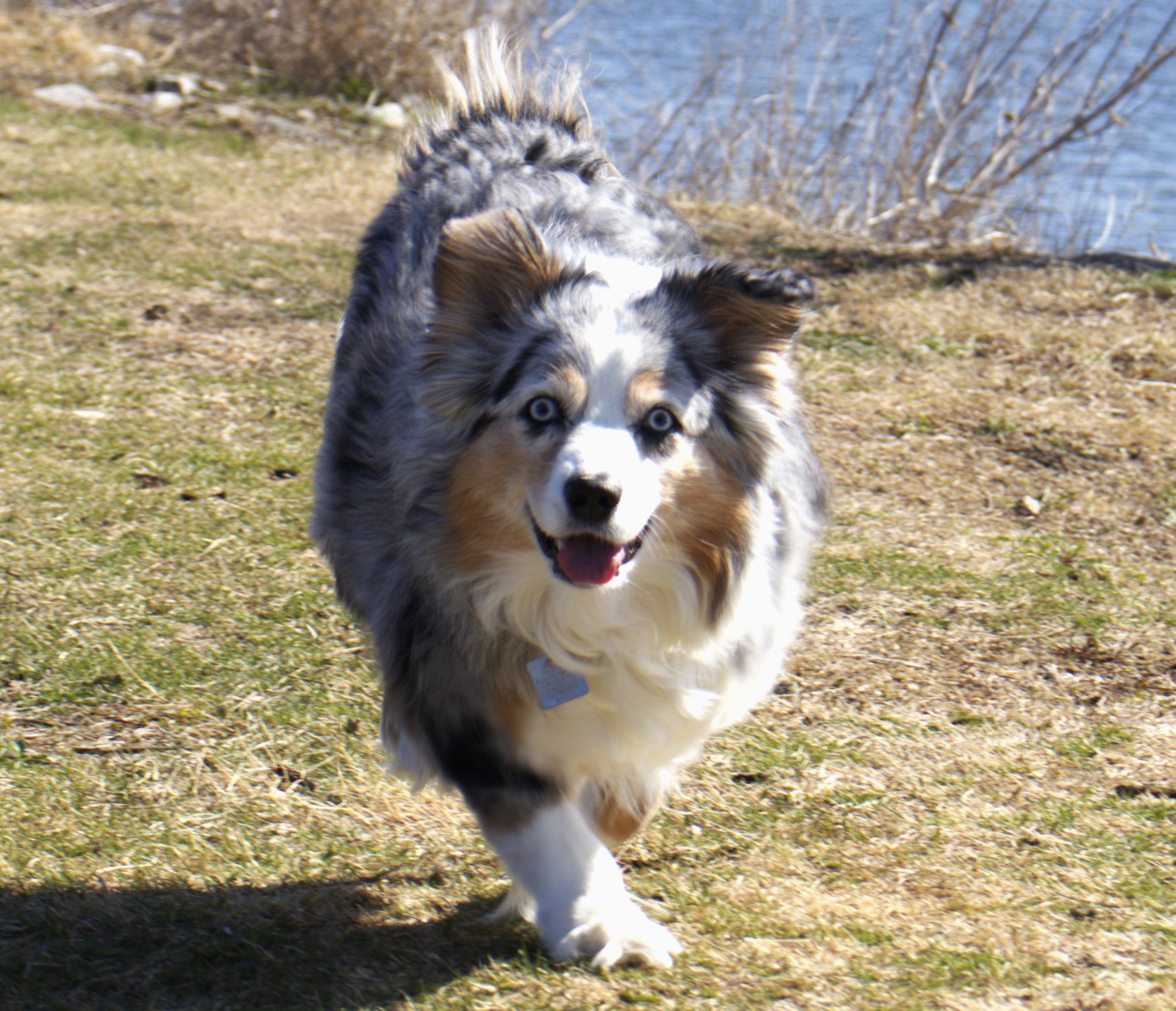
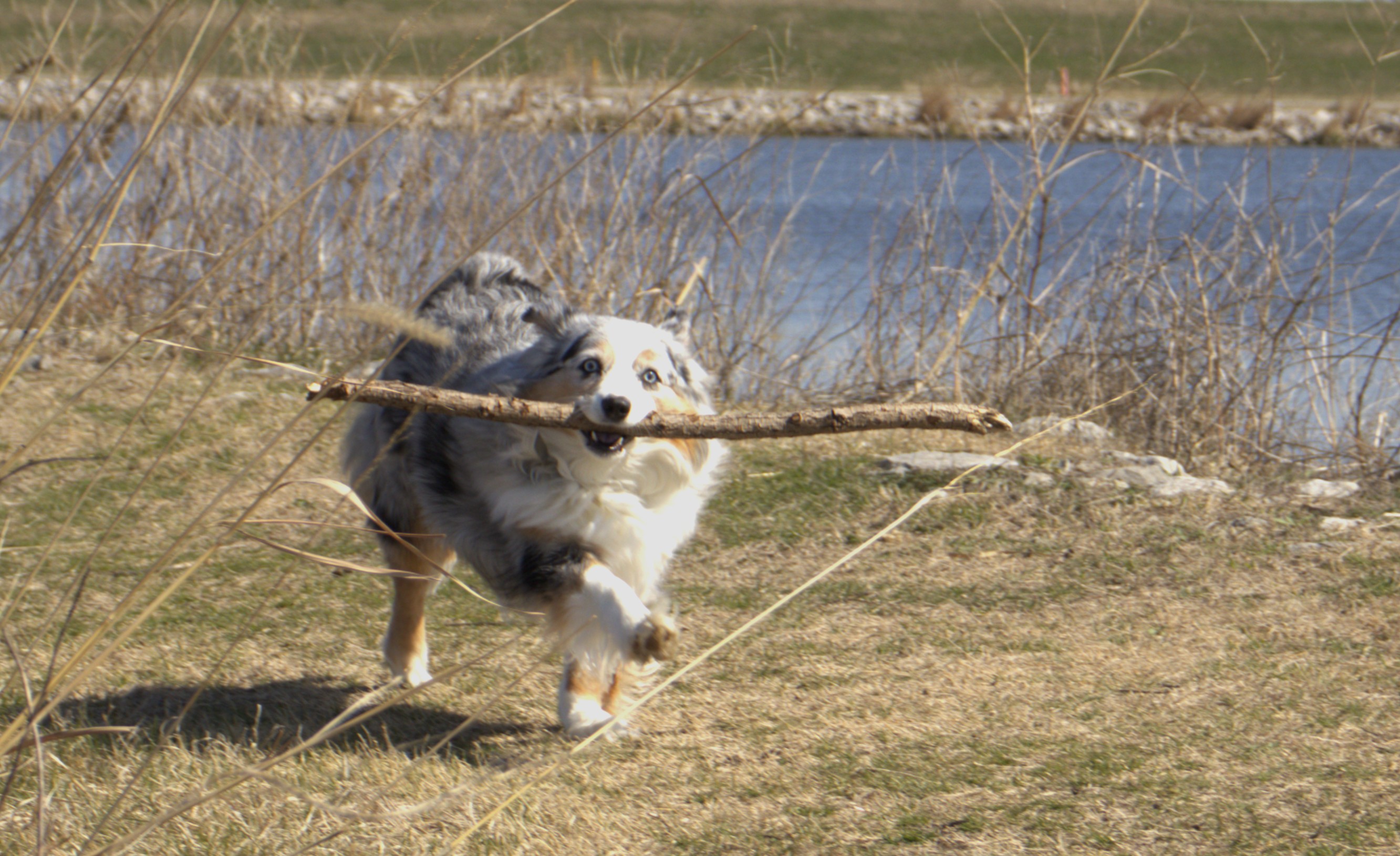
Yui our Aussie takes flight on the first thaw of spring.
In the Uffizi Gallery in Florence, Italy, hangs The Adoration of the Magi, a large oil painting by Leonardo da Vinci. I snapped the pic below (tightly cropped) during our trip to Europe last summer.
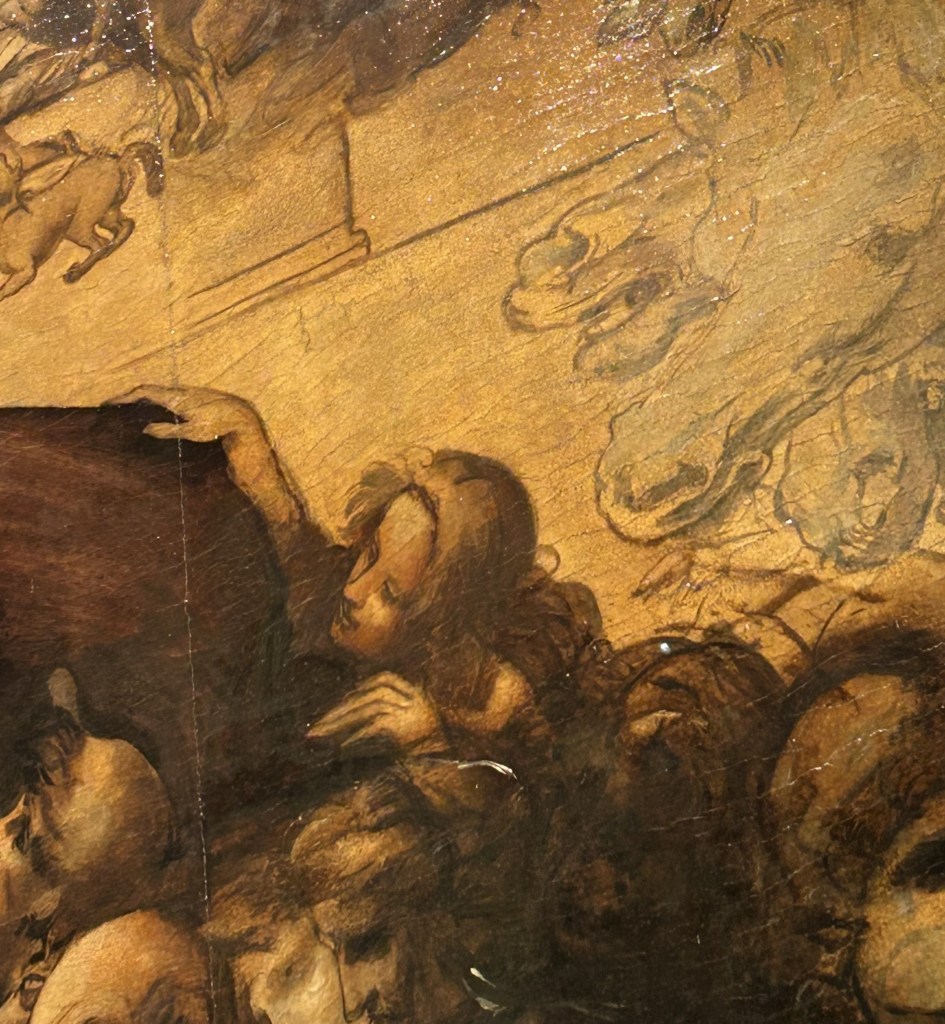
What makes it special, aside from being a 544-year-old da Vinci original, is that it’s unfinished. Note the “pencil” sketches of the horse’s heads in the upper right corner. Not often do you stumble across rough drafts of the world’s greatest artists. Did anyone back in the day get the chance to read Shakespeare’s edits of Romeo and Juliet, or Gutzon Borglum’s early carvings of Mount Rushmore? Or Taylor Swift’s scribbled notes to “Anti-Hero”? What we, the public at-large, always see is the final, polished product. We don’t witness the artists’ creative exuberance mingled with the arduous pain of refinement. The sausage made in the lonely hours of long nights and toiling days.
When my wife and I saw da Vinci’s work in that light, it became our favorite piece in the museum. His rough draft humanized our experience and made us feel closer to the artist. We appreciated this piece because we could identify with the author’s humanity. The sudden realization that da Vinci was capable of a rough draft was liberating. I always thought legends simply spoke masterpieces into existence. But here was something I could relate to. Most of our waking hours are spent on “works in progress,” not on turning in final products. It’s easy to forget, scolding ourselves for writer’s block, when maybe all along the deepest and most satisfying meaning is in the process of sketching, erasing, sketching, erasing.
By drawing those horses on the side, Leonardo reflected his unedited thoughts, displayed for the world. A canvas soaking up raw imagination. While some might pay more for the painted version, the penciled one is no less its equal. In any created work, the slog of a draft is proof of life and value. Each emerging version has intrinsic worth; otherwise, nothing does. The fact that iterations carry mistakes doesn’t blunt the skill of the artist or mar the unfinished product. The very definition of work means there’s a beginning, a middle and an end, but all of it is work. Work invites process and process, meaning.
As our three-week tour wound down, we moved on to watch premier athletes compete in the Summer Olympics and cruised past the elite Eiffel Tower on the Seine River. Near the end, in the Louvre, we stood in a long, winding line and fought a mass of tourists to get a glimpse of da Vinci’s other painting, the completed one that we all know and love as the Mona Lisa …
Thinking of her perched above thousands of cell phone cameras, I can’t help but think of the socially distanced penciled horses 700 miles away.
Both pieces are picture perfect.
One showcases the legend, the other his making.
jac
 just1writer